Posts

Reading Notes: Nursery Rhymes, Reading B

Image
  ("Story Time" by L. Leslie Brooke via Myth UN-Textbook ) The story that I chose to focus my reading notes on for this post is “Nursery Rhymes: Accumulated Stories” by Andrew Lang(1897). The first thing that I noticed when reading this section of the stories is that these stories are a lot longer than many of the other stories of in this reading. My guess is it is because of the nature of these stories. In these stories, the beginning always starts off simple but then something occurs that leads an event to happen. Then the event that just happened causes another event to happen and this goes on and on. This seems to be the reason why this section is called “Accumulated Stories” as each line of the story just keeps building off the last line. In terms of grammar, each line is not necessarily a complete sentence and as such ends with a comma rather than a period. Another thing is that since each line builds off of each other, many of the lines are repeated in each “par...

Reading Notes: Nursery Rhymes, Reading A

Image
  ("The Escaping Man" by L. Leslie Brooke via Myth UN-Textbook ) The section of the reading that I chose to focus my reading notes on for this post is “ Nursery Rhymes: Tales ” by Andrew Lang (1897). This section of the Mythology UN-Textbook focused on mostly nursery rhymes, but I chose to focus on the Tales section as I enjoyed the little stories told in each rhyme. As the name implies, each one of these the stories in this section rhyme. However, the way they rhyme differed between each story as one story could have one line rhyme with the very next line after it and another story could have one line rhyme with another line that is two lines after it. In general, the stories in this section are short in terms of a story but compared with the other nursery rhymes in the other sections, these stories are on the longer side. The punctuation of the stories is also quite interesting as the lines are not complete sentences and end with a comma rather than a period. I think...

Famous Last Words: A Busy Week

Image
  ("Studying" by Steven S. via Flickr ) This last week was a busy week for me as I had a whole lot of homework assignments. I also had business to do with the club I am in as well as a midterm. Therefore, I was not able to spend a whole lot of time on this class but luckily, I did some extra credit assignments during the break week. It honestly helped relieve some stress as I know that I did not have to do much for this class and could focus on studying for my midterm. However, I did do some assignments for this week which included the readings for the Native American unit. I did both portions of the reading this week as they do not take much time to complete but I would say that the reading for this week was a little more difficult than the other weeks. The main issue I think that I had was all the new vocabulary as well as all the new characters that were specific to that culture. It made it difficult because if you are not familiar with these terms or these character...

Reading Notes: Mississippi Valley and the Great Lakes, Reading B

Image
  ("Sun Worship" by Kevin Dooley via Flickr ) The story that I chose to focus my reading notes on for this post is “ The Worship of the Sun ” by Katharine Berry Judson (1914). This story is about a young boy named O-na-wut-a-qui-o who ended up meeting the Sun in the “Sky-Plain” and living with him for a while. The Sun was a mighty character that was worshipped amongst the people of the “Earth-Plain” and often interacted with the humans from the sky. The young boy lived with the Sun for a while and was able to see all the things that the Sun was able to do from up in the sky until eventually the boy grew weary of the place and asked to be sent back down. Similar to my other reading in this section, this story had some vocabulary that I was unfamiliar with such as “wigwam” however upon some research, I was able to find out what the words meant. The Sun and the Moon had a sort of magical presence in this story as they were presented as people that could practically do whate...

Reading Notes: Mississippi Valley and the Great Lakes, Reading A

Image
  ("Polar Bear" by Tambako via Flickr ) The story that I chose to focus my reading notes on for this post is “ The Great Flood ” by Katharine Berry Judson (1914). I chose to focus on this story because I actually remember reading about this story at the beginning of the semester while researching Storybook projects so I thought it would be interesting to see the original story. This story revolves around the trickster Manabush and how he gets his revenge on the evil spirit beings called Anamaqkiu. While reading through this story, the thing I noticed the most was the number of unfamiliar words and characters. I would say that if you have no prior knowledge of characters from Native American stories or no background information at all, this story might be a difficult read as I know it was for me. I had to do a little background research in order to really understand the stories but once you become familiar with the characters that are mentioned, then the story becomes a w...

Week 10 Lab: Advice To Writers

Image
  ("Royal KMM 'Magic Margin' Typewriter" by Seth Morabito via Flickr ) For my Story Lab assignment, I looked through Jon Winokur’s Advice to Writers site and found some interesting and relatable quotes. The first quote that kind of resonated with me is from Gabriel García Márquez and it talks about how the first paragraph is the hardest when writing to which I completely agree. The first paragraph for most of my stories, essays, etc. usually lays out the format or direction in which I want to go. After I finish that first paragraph, my writing usually gets a lot faster as the first paragraph lays out the framework that I follow when writing the rest of the paragraphs. However, I usually get stuck on the first paragraph because I find it difficult to provide a good introductory paragraph to kind of lead into my story or essay. Along with the first paragraph, I also find the final paragraph of a story or essay the most difficult because it’s hard for me to find a ...

Reading Notes: British North America Tales, Reading B

Image
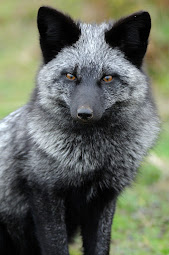
  ("Young Silver Fox" by Matt Knoth via Flickr ) The story that I chose to focus on for this post is “ Coyote and Fox ” by Katharine Berry Judson (1917). This story is about the Coyote and the Fox in which the Fox outsmarts the Coyote in various occasions. The first is when Coyote was sleeping after eating a bunch of rabbits, he left some rabbits in the oven to which Fox took advantage of. Fox ate all the rabbits in the oven as Coyote was too lazy until eventually Coyote got hungry. Since there was no food left, Coyote ended up chasing the Fox but was never able to catch him. The next trick that Fox played on Coyote was when Coyote stole the robe that Fox made out of eagle feathers as Coyote wanted an upgrade of his magpie robe. Coyote was successful in stealing the robe, but Fox used magic to get the robe back. In this story as well as other stories in this section, I would say that magic is quite commonplace. In this story, the Fox uses magic to get his robe back, b...