Posts

Week 14 Lab: Advice to Writers

Image
  ("Typewriter" by dr. shordzi via Flickr ) For my Week 14 Story Lab assignment, I read through some quotes on Jon Winokur’s Advice to Writers website. The first quote that really interested me was called “ The Golden Hours ” by Hilary Mantel. It basically says that even if you are busy with work, you can still put a few hours aside and if you are undistracted, you can accomplish a lot. I completely agree with this statement because if I honestly put my mind to writing, I can finish a lot quite fast. Even if I am busy with other schoolwork, I can always put aside an hour or two to do some writing for this class and if I am completely focused, which does not happen often, then I can accomplish a lot in that time period. The next quote that I related to was a quote by John McPhee called “ Writing is Selection ”. This quote is about how each part of writing is part of a selection process. As a writer, you choose the next paragraph, next word, next sentence, and more. I c...

Reading Notes: Europa's Fairy Book, Reading B

Image
  ("Androcles and the Lion" by John Batten via Myth UN-Textbook ) The story that I chose to focus my reading notes on for this post is “ Androcles and the Lion ” by Joseph Jacobs (1916). I chose this story for a similar reason that I chose the other story for this week’s reading as I have also heard this story before. However, the first version of this story that I read was extremely short and lacking in detail compared to this one. This story is basically about a runaway slave called Androcles who helps a lion by taking out a thorn in its paw to which the lion showed its appreciation by giving affection and food to Androcles. However, Androcles got captured by his former master who turned him into the authorities and Androcles was sentenced to death for running away from his master. The emperor decided to make him fight against a lion, but it turns out Androcles was fighting against the same lion that he rescued. The lion ended up stroking Androcles with his paw and on...

Reading Notes: Europa's Fairy Book, Reading A

Image
  ("Beauty and the Beast" by John Batten via Myth UN-Textbook ) The story that I chose to focus my reading notes on for this post is “ Beauty and the Beast ” by Joseph Jacobs (1916). This story caught my eye because I thought it would be interesting to read a story of something I am familiar with and to see how it differs from the story that I am used to. This story definitely differed from the version of “Beauty and the Beast” that I am familiar with, but I did a little extra research and found that there are so many different versions of the story with all of them differing in many details. This story reminded me of another story that I read this semester called “The Three Roses” because in both cases, the parents picked a rose from where they weren’t allowed to and had to give up their daughters in exchange. Then at the end the creature, the beast in “Beauty and the Beast” and the basilisk in “The Three Roses, ended up turning into a handsome prince or youth. The form...

Week 13 Story: The Aftermath of Johnny-Cake

Image
Author’s Note: The original story that I based my story off of was based around a Johnny-Cake that escaped the oven and ran away from all the people chasing it. It ran away from the family of three cooking the cake, two well-diggers, two ditch-diggers, a bear, and a wolf until it eventually got caught by a fox that outwitted the Johnny-Cake rather than trying to chase after it. Based on the original characters, I made my story to be similar to interview statements from the perspective of some of the characters that Johnny-Cake outran. Therefore, I kept the same characters and end result of the people chasing Johnny-Cake but just changed how the story was seen through the perspectives of different characters. If you were not familiar with johnnycakes, a johnnycake is a cornmeal flatbread similar to a pancake.  ("Johnnycake" by Wanchen Tai via  Flickr ) “Never in all my year would I have thought I would see a johnnycake up and running but there it went with my little boy ch...

Reading Notes: English Fairy Tales, Reading B

Image
  ("Johnny-Cake" by John D Batten via MYTH UN-Textbook ) The story that I chose to focus my reading notes on for this post is “ Johnny-Cake ” by Joseph Jacobs (1890). This story is based around a cake that escaped the oven and caused everyone to chase after him until in the end, he was eaten by a fox. This story seems like an accumulative story which I saw in last week’s readings as the story is somewhat repetitive but keeps on building on top of itself. It seems like an accumulative story as the story continues with the same lines where Johnny-cake is running away from everyone until he meets someone new and tells them who he has outrun. Then he bets that he can outrun them too and the people he meets ends up chasing him. This same plot and lines are the same throughout the entire story with the only thing changing is exactly who is chasing him. In the end, Johnny-cake gets caught by a fox who outsmarts him by saying that he can’t hear Johnny-cake causing Johnny-cake ...

Reading Notes: English Fairy Tales, Reading A

Image
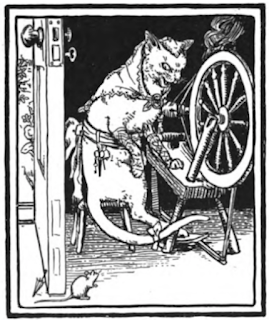
  ("Mouse and Mouser" by John D. Batten via Myth-UnTextbook ) The story that I chose to focus my reading notes on for this post is “ Mouse and Mouser ” by Joseph Jacobs (1890). This story is about a cat and a mouse where the mouse tells the cat about everything that it does while the cat always encourages the mouse by saying that it makes the mouse better to eat. This story is broken up into two lines for each “paragraph” with it switching between the cat and mouse speaking. The cat is denoted by having CAT before the paragraph while MOUSE is always above the paragraph in which the mouse speaks. The first line of each paragraph typically ends with the mouse saying, “my lady” or the cat saying, “good body”. This ending usually appears twice at the end of the first sentence of each paragraph and the second line in the paragraph usually gets rid of one of the saying for example if the first sentence ended in “my lady, my lady” the second sentence would end in only “my lady”...

Week 12 Lab: Writers Write

Image
("Writing a Book" by Laura via Flickr ) For my Story Lab assignment, I looked through the Writer’s Write website and found an interesting article while looking throughout the page. The article is called “ Don’t Commit These 9 Fiction-Writing Crimes ” by Alex J. Coyne. This title really jumped out at me because I wondered if I made any of these so called “crimes” throughout all the stories if I have written in the class and if I have, is there a way to fix that. The first two points of this article go together as the mistakes are to either over-describe or under-describe scenes and setting. I completely understand this because if you under-describe a scene or setting, then it could be difficult to immerse yourself in the story and if you over-describe, it may seem like too much detail that pulls away from the main story. The third point is simply grammatical mistakes, but this can definitely be avoided by some proofreading. The next two points also go together as Alex d...

Reading Notes: Nursery Rhymes, Reading B

Image
  ("Story Time" by L. Leslie Brooke via Myth UN-Textbook ) The story that I chose to focus my reading notes on for this post is “Nursery Rhymes: Accumulated Stories” by Andrew Lang(1897). The first thing that I noticed when reading this section of the stories is that these stories are a lot longer than many of the other stories of in this reading. My guess is it is because of the nature of these stories. In these stories, the beginning always starts off simple but then something occurs that leads an event to happen. Then the event that just happened causes another event to happen and this goes on and on. This seems to be the reason why this section is called “Accumulated Stories” as each line of the story just keeps building off the last line. In terms of grammar, each line is not necessarily a complete sentence and as such ends with a comma rather than a period. Another thing is that since each line builds off of each other, many of the lines are repeated in each “par...

Reading Notes: Nursery Rhymes, Reading A

Image
  ("The Escaping Man" by L. Leslie Brooke via Myth UN-Textbook ) The section of the reading that I chose to focus my reading notes on for this post is “ Nursery Rhymes: Tales ” by Andrew Lang (1897). This section of the Mythology UN-Textbook focused on mostly nursery rhymes, but I chose to focus on the Tales section as I enjoyed the little stories told in each rhyme. As the name implies, each one of these the stories in this section rhyme. However, the way they rhyme differed between each story as one story could have one line rhyme with the very next line after it and another story could have one line rhyme with another line that is two lines after it. In general, the stories in this section are short in terms of a story but compared with the other nursery rhymes in the other sections, these stories are on the longer side. The punctuation of the stories is also quite interesting as the lines are not complete sentences and end with a comma rather than a period. I think...

Famous Last Words: A Busy Week

Image
  ("Studying" by Steven S. via Flickr ) This last week was a busy week for me as I had a whole lot of homework assignments. I also had business to do with the club I am in as well as a midterm. Therefore, I was not able to spend a whole lot of time on this class but luckily, I did some extra credit assignments during the break week. It honestly helped relieve some stress as I know that I did not have to do much for this class and could focus on studying for my midterm. However, I did do some assignments for this week which included the readings for the Native American unit. I did both portions of the reading this week as they do not take much time to complete but I would say that the reading for this week was a little more difficult than the other weeks. The main issue I think that I had was all the new vocabulary as well as all the new characters that were specific to that culture. It made it difficult because if you are not familiar with these terms or these character...

Reading Notes: Mississippi Valley and the Great Lakes, Reading B

Image
  ("Sun Worship" by Kevin Dooley via Flickr ) The story that I chose to focus my reading notes on for this post is “ The Worship of the Sun ” by Katharine Berry Judson (1914). This story is about a young boy named O-na-wut-a-qui-o who ended up meeting the Sun in the “Sky-Plain” and living with him for a while. The Sun was a mighty character that was worshipped amongst the people of the “Earth-Plain” and often interacted with the humans from the sky. The young boy lived with the Sun for a while and was able to see all the things that the Sun was able to do from up in the sky until eventually the boy grew weary of the place and asked to be sent back down. Similar to my other reading in this section, this story had some vocabulary that I was unfamiliar with such as “wigwam” however upon some research, I was able to find out what the words meant. The Sun and the Moon had a sort of magical presence in this story as they were presented as people that could practically do whate...

Reading Notes: Mississippi Valley and the Great Lakes, Reading A

Image
  ("Polar Bear" by Tambako via Flickr ) The story that I chose to focus my reading notes on for this post is “ The Great Flood ” by Katharine Berry Judson (1914). I chose to focus on this story because I actually remember reading about this story at the beginning of the semester while researching Storybook projects so I thought it would be interesting to see the original story. This story revolves around the trickster Manabush and how he gets his revenge on the evil spirit beings called Anamaqkiu. While reading through this story, the thing I noticed the most was the number of unfamiliar words and characters. I would say that if you have no prior knowledge of characters from Native American stories or no background information at all, this story might be a difficult read as I know it was for me. I had to do a little background research in order to really understand the stories but once you become familiar with the characters that are mentioned, then the story becomes a w...

Week 10 Lab: Advice To Writers

Image
  ("Royal KMM 'Magic Margin' Typewriter" by Seth Morabito via Flickr ) For my Story Lab assignment, I looked through Jon Winokur’s Advice to Writers site and found some interesting and relatable quotes. The first quote that kind of resonated with me is from Gabriel García Márquez and it talks about how the first paragraph is the hardest when writing to which I completely agree. The first paragraph for most of my stories, essays, etc. usually lays out the format or direction in which I want to go. After I finish that first paragraph, my writing usually gets a lot faster as the first paragraph lays out the framework that I follow when writing the rest of the paragraphs. However, I usually get stuck on the first paragraph because I find it difficult to provide a good introductory paragraph to kind of lead into my story or essay. Along with the first paragraph, I also find the final paragraph of a story or essay the most difficult because it’s hard for me to find a ...

Reading Notes: British North America Tales, Reading B

Image
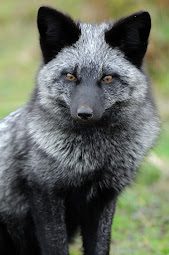
  ("Young Silver Fox" by Matt Knoth via Flickr ) The story that I chose to focus on for this post is “ Coyote and Fox ” by Katharine Berry Judson (1917). This story is about the Coyote and the Fox in which the Fox outsmarts the Coyote in various occasions. The first is when Coyote was sleeping after eating a bunch of rabbits, he left some rabbits in the oven to which Fox took advantage of. Fox ate all the rabbits in the oven as Coyote was too lazy until eventually Coyote got hungry. Since there was no food left, Coyote ended up chasing the Fox but was never able to catch him. The next trick that Fox played on Coyote was when Coyote stole the robe that Fox made out of eagle feathers as Coyote wanted an upgrade of his magpie robe. Coyote was successful in stealing the robe, but Fox used magic to get the robe back. In this story as well as other stories in this section, I would say that magic is quite commonplace. In this story, the Fox uses magic to get his robe back, b...

Reading Notes: British North America Tales, Reading A

Image
  ("Sun over Earth" by NASA via Flickr ) The story that I chose to focus my reading notes on for this post is “ Creation of the Earth ” by Katharine Berry Judson (1917). This story is about how the creation of the Earth as well as the how the moon, sun, and stars ended up in the sky. In this story, the Earth, Sun, Moon, and Stars are all characters with the Sun and Earth being spouses and the Moon and Stars being relatives of the Sun. The husband Sun always got yelled at by his wife, Earth and ended up getting kicked out of the house they shared because the Earth complained that the Sun made the house too hot. This happened a lot and Sun ended up moving away with his relatives Moon and Stars, leaving the Earth alone. Old Man went up to the Earth and asked why she was alone to which she told what had happened. The Old Man went up to the Sun, Moon, and Stars to send them up into the sky where they would never be able to desert or hide from someone again. The Old Man then...

Week 9 Story: Why Lightning Accompanies the Rain

Image
Author’s Note: The original story relates thunder and lightning to a being a mother sheep and her ram. The ram often gets angry and causes damage to house and trees causing the mother to loudly yell at the ram to stop. The ram doesn’t listen and continues to cause trouble until the king eventually has to banish the sheep (thunder) and the ram (lightning) into the sky. The ram still causes damages, but you can sometimes hear the sheep rebuke the son unless she is too far away. For the most part, I kept my story close to the original, but I just added the fish representing the rain to the story. I added rain because rain typically goes along with thunder and lightning and I made rain a fish as fishes are typically associated with water. ("Lightning" by Diamond Hoo Ha Man via Flickr ) Long ago, thunder and lightning lived on the earth in the outskirts of the town far from the presence of others. They used to live inside the town however, lightning always caused trouble lea...

Reading Notes: Nigeria Folk Stories, Reading B

Image
  ("Lightning" by Ben Napper via Flickr ) The story that I chose to focus on for this post is “ The Story of the Lightning and the Thunder ” by Elphinstone Dayrell (1910). I chose this story because I thought that it related to the story that I wrote the reading notes for Part A of this reading. This story tells about thunder and lightning while relating thunder to being a sheep and lightning being a ram. Lightning is thunder’s son and lightning always makes a lot of trouble. He knocks down trees, burns down houses, and destroys the land similar to what actual lightning does. The loud sound that thunder usually makes in real life is actually thunder yelling at lightning to stop making trouble according to the story. Lightning ended up causing too much trouble and the king of people banished both lightning and thunder into the sky. The story ends by saying that the thunder you hear sometimes is when thunder is rebuking lightning but sometimes when lightning runs too far...

Reading Notes: Nigeria Folk Stories, Reading A

Image
  ("Sun and Moon" by Wonderlane via Flickr ) The story that I chose to focus my reading notes on for this post is “ Why the Sun and the Moon Live in the Sky ” by Elphinstone Dayrell (1910). This story is about how the sun and the moon, his wife, invited the water and his people their home. The water warned the sun that his people were numerous and that they would have to buy an extremely large compound to house them all. Once the water arrived at the sun’s house, a few of his people went in and filled the house until the water was knee-deep. Every now and then, the water would ask the sun if it was okay for more of his people to come in, to which the sun agreed. Eventually, the water filled the entire house until the sun and his wife had to escape to the roof. They eventually went up to the sky and stayed there ever since. This story and the others in this section all have a similar plot and ending to them. It usually ends with why something is the way it is such as w...

Week 8 Progress

Image
  (Inspiration Message by Bunny Jager via Flickr ) I’m quite satisfied with my progress so far as I’m on par to finish the course on the expected time. My routine is pretty consistent as I tend to do the assignments either the day before they are due or the day of. Since the assignments don’t take that much time, I could do them fairly quickly even if they are due the day when I start them. I enjoy the reading assignments the most as they bring new interesting stories for me to read. I haven’t done any of the extra credit options but that is something I definitely want to take advantage of starting with the second half of the semester. Overall, I think my progress in the class is okay but could definitely be better if I start working ahead and take advantage of the extra credit assignments.

Week 8 Comments and Feedback

Image
I think that the feedback that I am receiving from other students is very helpful. I think that the shorter comments are good for seeing what I am doing correctly while the longer comments are super helpful for seeing what I am doing right as well as what I can improve on. Personally, for my feedback comments, I think that my longer feedback comments are good enough, but I could definitely improve on the shorter comments. I think that connecting to people through their blogs allows you to see a little bit of their personality both through their personalities and their writing style, so I think that it’s a good way to get to know people. For future feedback assignments or blog comments assignments, I might want to improve giving more helpful feedback in my shorter feedback comments. ( Negative Thoughts Cat by Laura Gibbs) I chose this particular image because I really believe in this message. If you keep negative thoughts in your head all the time, it will greatly affect your mo...